
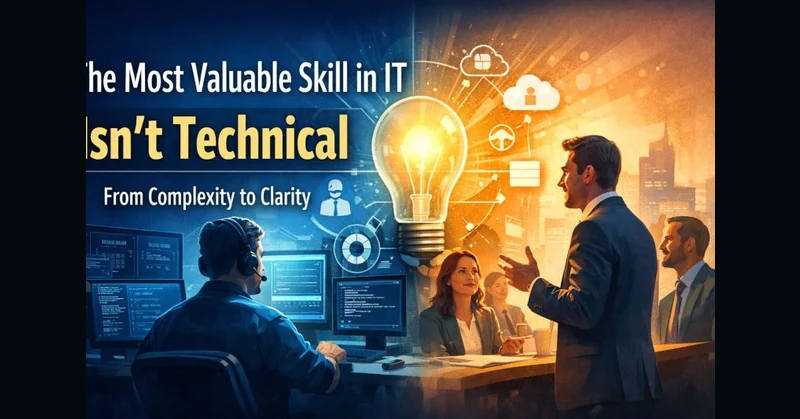
Spend enough time in technology and you start to notice something interesting. The people who make the biggest impact in IT are not always the ones who know the most commands, the most programming languages, or the deepest architecture diagrams. Technical skill matters, but it is not the skill that ultimately defines long term influence.
The most valuable skill in IT is communication.
That may sound strange in a field built around systems, infrastructure, and code. But technology rarely fails because of technology alone. More often it fails because people misunderstand the problem, underestimate the risk, or struggle to explain what needs to happen next.
An engineer might fully understand why a system needs to be replaced, why a vulnerability matters, or why a network design introduces risk. But if that message cannot be translated into language leadership understands, the decision often gets delayed. Months later the organization is dealing with the consequences of a problem that was technically obvious but never clearly communicated.
The professionals who make the biggest difference learn how to bridge that gap.
They can explain complex systems in simple terms. They can translate technical risk into operational risk. They can sit in a room with executives, faculty, administrators, or business leaders and help them understand not just how something works, but why it matters.
This skill becomes even more important as careers move from engineering into leadership.
Early in a career success often comes from solving technical problems directly. Over time the role shifts. Leaders do not just solve problems themselves. They help organizations understand which problems matter most and why they require attention now rather than later.
Communication becomes the multiplier.
It builds trust with leadership. It helps teams understand priorities. It ensures the right problems get solved before they become crises. And perhaps most importantly, it helps technology move from being viewed as a support function to becoming part of the strategic conversation.
The strongest technology leaders I have worked with share this trait. They are technically capable, but they are also translators. They help organizations move from confusion to clarity.
In many ways the real job of IT leadership is not just managing systems. It is helping people understand the systems that shape their work, their security, and their future.
Technical expertise opens the door. Communication is what allows that expertise to influence outcomes.
Curious how others in the field see this.
What skill has made the biggest difference in your IT career beyond pure technical knowledge?