
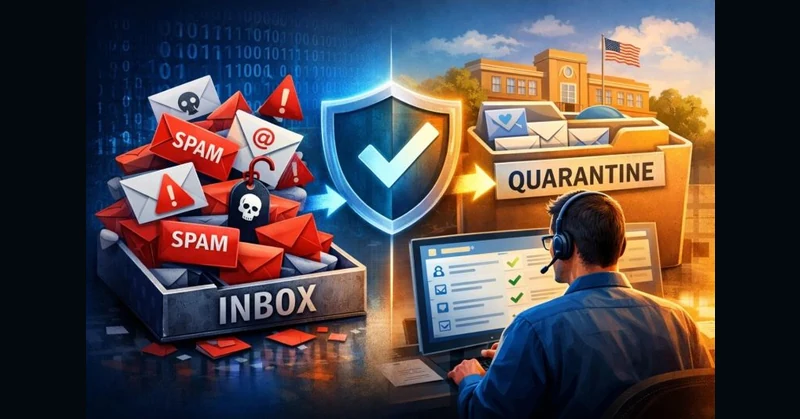
This week we enabled a bulk email quarantine feature that, if I am honest, I would have hesitated to turn on a few years ago.
In higher education, email is oxygen. Work order confirmations. Vendor ticket updates. Grant opportunity notifications. State and federal communications. Conference invites. Research collaboration. The risk of disrupting legitimate communication is real. If you overcorrect, you create friction. If you undercorrect, you invite chaos.
For a long time, I leaned toward avoiding disruption.
But the volume of phishing attempts and low-quality spam targeting our staff and students has steadily increased. Not just nuisance messages, but convincing, socially engineered attempts designed to exploit trust. The cognitive load alone was becoming a cost. Every suspicious email forces a decision. Every decision consumes time. Multiply that across a campus and it adds up quickly.
So we shifted.
Instead of allowing bulk-patterned messages to land directly in inboxes, they now route to quarantine for review. That decision came with real concern. What happens when a legitimate vendor response gets flagged? What about automated work order replies? External funding announcements? Critical notifications from partners we rely on?
Security cannot become an obstacle to operations.
The difference now is control and visibility. We are not handing the keys to an algorithm and hoping for the best. We can exempt known vendors. We can tune policies. We can adjust as patterns emerge. This is not an all-or-nothing move. It is measured and intentional.
Since enabling it, the reduction in phishing noise has been dramatic. Staff are reporting fewer suspicious emails. Students are forwarding fewer “is this real?” messages. That alone tells me we were absorbing more risk than we realized.
There will be a settling period. There always is when you change culture around security. We are planning weekly quarantine summaries so departments can review what was held and request release of anything legitimate. That transparency matters. It builds trust in the system instead of resentment toward it.
Blocked messages are a different story. Those are identified as known malicious actors and will continue to require IT review. While false positives can happen, that line needs trained judgment. Protecting the institution sometimes means saying no on behalf of the college.
This experience is shifting my perspective. Stronger security does not have to mean loss of control. It can mean smarter control. It can mean reducing cognitive burden for your people while still preserving operational flow.
In higher ed especially, we often hesitate to tighten controls because we value openness. But openness without guardrails becomes vulnerability.
Have you implemented bulk quarantine controls in your environment?
How are you balancing risk reduction with operational continuity?