
One of the themes that continues to stand out to me through the NC CGCIO program is how much the role of technology leadership has changed.
Being an IT leader today isn’t just about keeping the network up, protecting systems, replacing hardware, or implementing the next piece of technology.
Those things still matter. But they’re only part of the job.
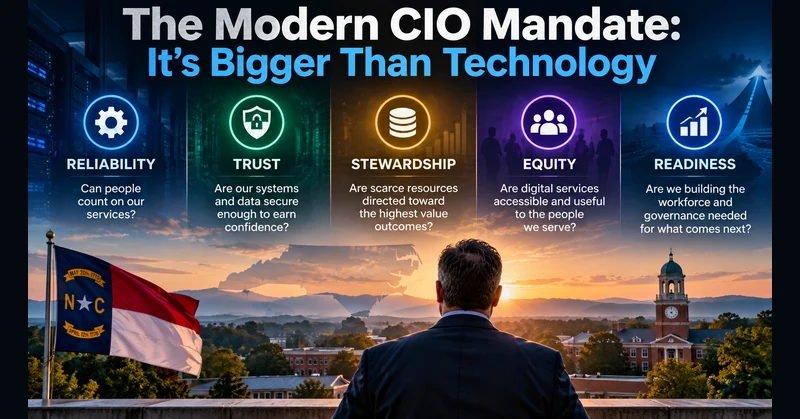
A discussion today framed the modern public-sector CIO’s responsibility around five questions:
Reliability: Can the people we serve depend on our technology?
Trust: Are we protecting systems and data in a way that earns confidence?
Stewardship: Are we putting limited resources toward the things that provide the greatest value?
Equity: Are the digital services we build actually accessible and useful to everyone we serve?
Readiness: Are we developing our people, policies, and governance for what comes next?
That last one really sticks with me.
Technology changes faster than most organizations can budget, procure, implement, or sometimes even understand. AI is probably the clearest example right now. Our responsibility as technology leaders isn’t simply to react when something new arrives. We have to prepare the organization before it arrives.
And perhaps the biggest lesson for me is this:
The CIO’s job is no longer just to manage technology. It is to help the organization manage change through technology.
That requires us to get outside of the server room, understand the business, listen to the people we serve, communicate risk, develop our teams, and make sure technology investments actually support the mission.
Another great lesson from my journey through NC CGCIO and another reminder that leadership is something we never finish learning.