
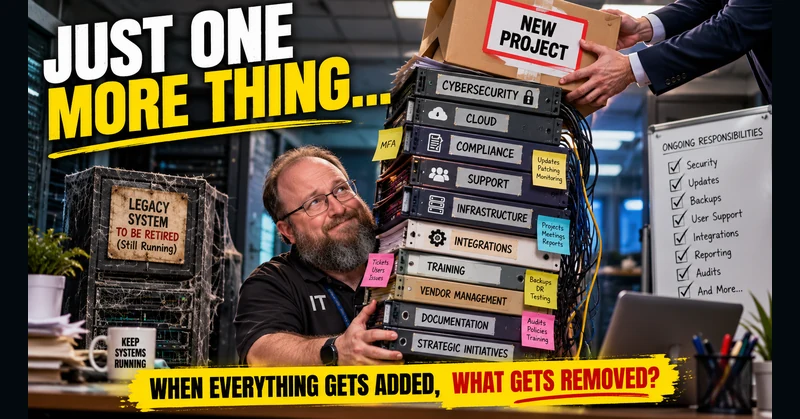
Every new initiative comes with a cost, even when the technology is free.
Organizations constantly introduce new systems, platforms, and services to improve efficiency, modernize operations, or better serve their customers.
But before approving the next big project, how often do we ask:
Do we have the people, skills, time, and resources to support this?
We evaluate the cost of purchasing and implementing technology, but sometimes overlook the long-term cost of maintaining it.
And what happens when the new system doesn't actually replace the old one?
A modernization project promises to eliminate an aging platform. But the transition takes months, sometimes years. Meanwhile, IT must maintain the existing environment while implementing, integrating, securing, and supporting its replacement.
Instead of reducing the workload, we've temporarily doubled it.
Worse, temporary solutions have a funny way of becoming permanent.
Now consider the employees responsible for making this happen.
Just because someone has the ability to do something doesn't mean they have the capacity to do it.
Our best employees often inherit additional responsibilities precisely because they're dependable. Eventually, their reward for excellent work becomes even more work.
That's not necessarily a staffing problem. It's a capacity planning problem.
And IT leadership shares responsibility.
We cannot simply blame administration for approving projects without understanding their operational impact. Technology leaders must communicate what saying "yes" actually costs.
What responsibilities will be reduced? What projects will be delayed? What additional resources are required? When will the legacy system be retired?
Sometimes the answer genuinely is more staff. Sometimes it's better processes, eliminating redundant systems, or reconsidering priorities.
But we cannot continue expanding expectations without evaluating capacity.
We talk about technical debt, but what about operational debt?
Every unfinished migration, temporary workaround, redundant platform, and additional responsibility creates an obligation someone must eventually fulfill.
Unlike financial debt, operational debt doesn't arrive with a monthly statement.
It quietly consumes employee time and organizational resources.
Growth and modernization are necessary. But responsible leadership means understanding their full cost.
Before asking IT to take on something new, perhaps we should first ask what we're willing to take off their plate.
When was the last time your organization retired a responsibility instead of adding another one?