
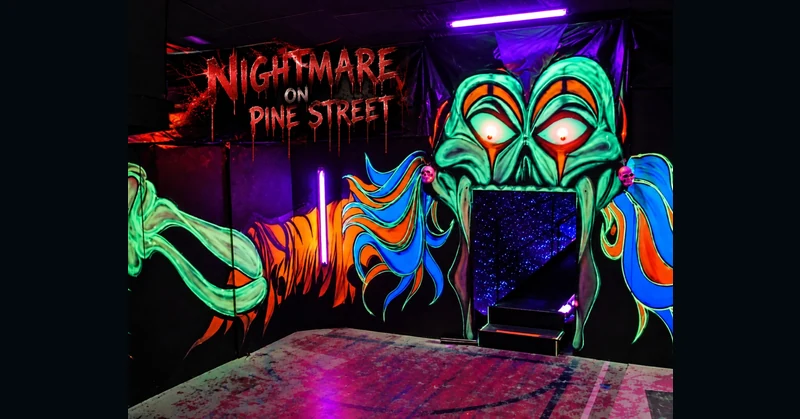
With Halloween approaching, I've been reflecting on something from my childhood that helped shape how I approach challenges today.
Growing up, I used my theater skills to help create and operate haunted houses. At the time, it was about having fun, scaring people, and bringing our imaginations to life.
Looking back, it was so much more.
Before anyone walked through the doors, we needed a plan. What were we creating? What materials did we need? What could we afford? How would everything come together?
There was research, budgeting, designing, building, and problem-solving.
We learned lighting, sound, and visual effects. How could we turn an ordinary room into something terrifying? How could timing, darkness, and imagination create an unforgettable experience?
Then came operations.
Managing money, keeping people safe, organizing responsibilities, and troubleshooting problems.
And when Halloween ended, the work wasn't over. Everything had to be dismantled, cleaned, and stored.
Without realizing it, I was learning project management, financial responsibility, technical skills, teamwork, risk management, and lifecycle management.
But perhaps the greatest lesson was learning to see beyond what was directly in front of me.
A pile of lumber wasn't just lumber. A dark room wasn't just a dark room. A limited budget wasn't necessarily a limitation.
They were possibilities waiting for someone to connect the pieces.
That ability to envision something that doesn't exist yet, understand what it takes to make it real, and recognize its entire lifecycle has stayed with me throughout my career in technology.
It also makes me think about the next generation of learners.
Are we giving them enough opportunities to experience the entire process of creating something?
Not just completing an assignment or operating a tool, but understanding why something exists, what it costs, how it works, who it affects, and what happens when it's no longer needed.
There's a difference between learning how to complete a task and learning how to think through an entire problem.
We need experiences where learners can experiment, make mistakes, manage resources, solve problems, and take ownership from beginning to end.
When learning has weight, depth, and real consequences, those lessons extend far beyond the classroom.
I didn't realize it then, but those haunted houses helped build the foundation for how I think today.
Sometimes the most valuable education happens when we don't even realize we're learning.
And sometimes, it starts with a little imagination, a few pieces of lumber, and the desire to scare somebody on Halloween. 🎃