
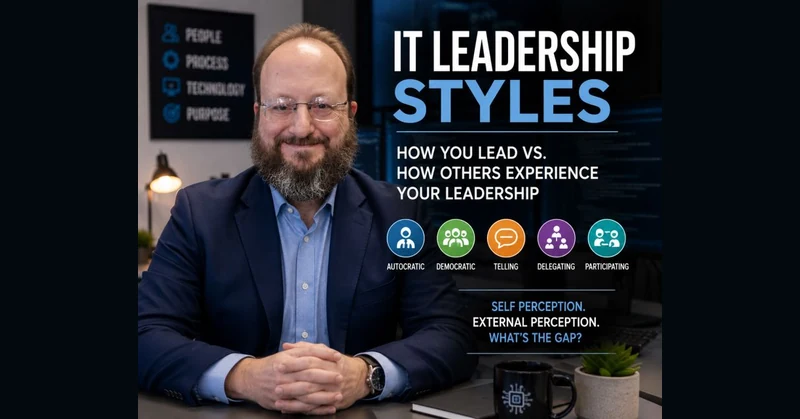
One of the most interesting things about leadership is that most of us can describe the kind of leader we think we are.
The harder question is whether the people around us would describe us the same way.
In IT leadership, I’ve found most leadership styles tend to fall into a few common categories.
Autocratic leadership is highly directive. The leader makes decisions, sets expectations, and drives execution. This style can be effective during outages, cybersecurity incidents, or disaster recovery events where speed and clarity matter most.
Democratic leadership focuses on collaboration. Leaders seek input, encourage discussion, and consider multiple perspectives before making decisions. This approach often works well during planning, budgeting, and long-term technology initiatives.
Telling leadership is direct and immediate. Communication is clear and not open for debate in the moment. This style has an important place in high-pressure situations where teams need fast direction and quick execution.
Delegating leadership centers on trust and empowerment. The leader defines the objective and gives team members the authority to execute. This works especially well with experienced professionals who thrive when given ownership and autonomy.
Participating leadership emphasizes two-way communication. Leaders involve team members in solving problems and shaping strategy. This style recognizes that strong ideas often come from those closest to the work.
The truth is, strong leaders rarely operate in just one style.
An effective IT leader may use a participating style during planning, a delegating style during projects, and a telling style during a major outage.
Good leadership is not about sticking to one approach. It is about knowing what the situation requires.
Here’s the question I often ask people.
What leadership style do you believe you are?
Now for the harder question.
If I interviewed your supervisor, peers, or direct reports, would they describe your leadership style the same way?
That gap between self-perception and external perception can reveal more about our leadership than any title ever could.
How do you lead? How do others experience your leadership? And if those answers are different, what does that tell you?