
Have you ever stopped to calculate how much value you gain from just 10 minutes saved each day?
At first, it doesn’t sound like much. But those 10 minutes a day add up to roughly 60 hours a year. For many organizations, that could mean over $2,000 in value saved per employee. When multiplied across a team or department, the compounding impact is hard to ignore.
That is why I have always believed in measuring Return on Scripting Effort (R.O.S.E.), the small automations, workflows, and time savers that make systems and people more efficient. But lately, I have been thinking about how to measure Return on AI Synergy and Effort (R.A.I.S.E.) too.
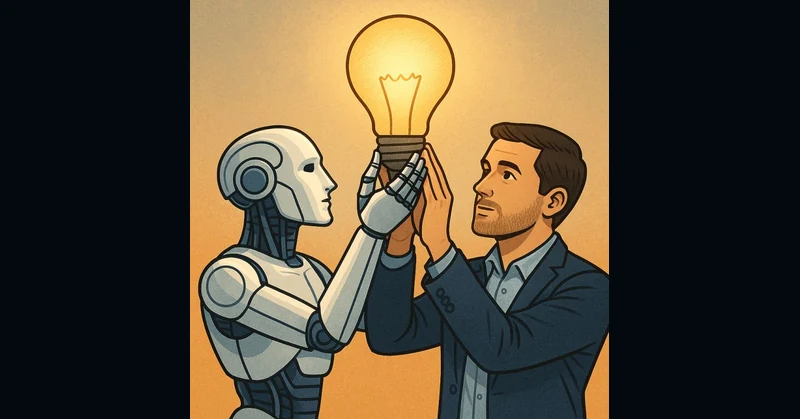
Because AI alone does not replace effort. It amplifies it. AI’s real value is not in doing the work for you. It is in reshaping how you think about the work you are doing.
The biggest wins I have had with AI did not come from perfect prompts or shortcuts. They came from conversations, when I asked AI to challenge me, not just agree with me. Try this sometime: ask your AI tools to tell you the truth, even if it contradicts your assumptions. Ask it to tell you what is missing, what could fail, or what a competitor would do differently. That is how you start to train AI to be a thinking partner, not just a “yes man.”
AI becomes most powerful when it is paired with original thought. If your prompt only seeks validation, you will always get the answer you want, not the one you need. But when you build honesty and curiosity into your “environment variables” for AI, phrases like “tell me what I am missing” or “be brutally honest,” you start seeing exponential returns in clarity, creativity, and confidence.
That is the real R.A.I.S.E. Return on AI Synergy and Effort.
AI should not be the sole deliverable in your workflow. It should be the co-pilot helping you think more critically, ask better questions, and push your boundaries of what is possible.
What is one way AI has helped you think better rather than just work faster?