
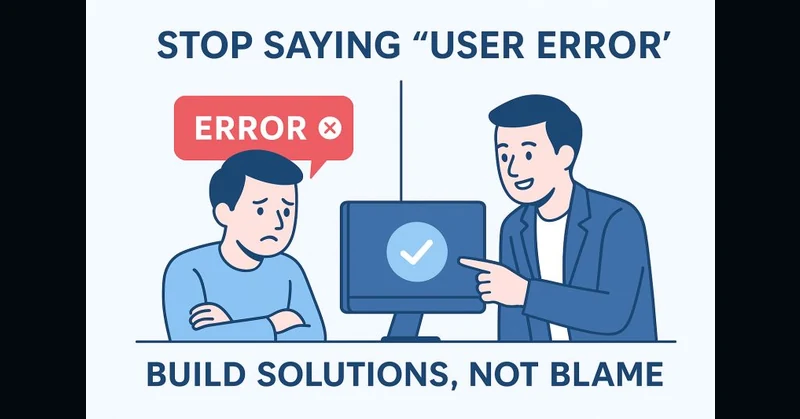
The phrase “user error” has been part of IT culture for decades. It is quick, convenient, and often used to explain why something went wrong when the technology itself seemed fine. A password was mistyped, a setting misconfigured, or a file deleted. Case closed. But the truth is that saying “user error” does not solve problems. It hides them.
Every time we label an issue as user error, we shift the responsibility away from design, training, or communication and place it entirely on the person who trusted the system. It creates an invisible barrier between IT and the people we are supposed to serve. It quietly sends the message that technology is perfect and people are flawed. That mindset erodes trust and turns IT into a department of gatekeepers instead of partners.
The better question is not “What did the user do wrong?” It is “What about this system made that mistake possible?” When you start looking at errors through that lens, patterns emerge. If users keep locking their accounts, maybe password complexity rules are unrealistic. If staff struggle to submit forms, perhaps the process is not intuitive. If support tickets pile up around the same issue, maybe training or documentation needs improvement. Every “user error” is a design opportunity in disguise.
Leaders who remove that phrase from their vocabulary help transform IT culture from reactive to proactive. The focus shifts from blame to understanding. Conversations become more collaborative. Instead of telling someone what they did wrong, IT teams can say, “Let’s look at how we can make this easier next time.” That small change in tone encourages communication, builds confidence, and reminds everyone that technology should serve people, not the other way around.
When IT takes ownership of the user experience, it changes how the entire organization sees technology. It turns frustration into partnership and creates an environment where staff feel supported rather than judged. That is when innovation actually takes root, when people feel safe to experiment, learn, and ask questions without fear of being blamed for making a mistake.
Eliminating “user error” is not about protecting feelings. It is about building systems that work better, training that empowers users, and a culture that values empathy as much as efficiency. The most successful IT organizations are not the ones that never make mistakes; they are the ones that turn every mistake into an opportunity to improve design, documentation, or communication.
So the next time you are tempted to label something as user error, pause. Ask what could have been clearer, simpler, or more intuitive. You might uncover a weakness in the process, not the person. That shift in mindset is what separates technical support from true leadership.
What do you think? Do you still hear “user error” in your environment? How do you reframe those moments to build a stronger culture of service and collaboration?