
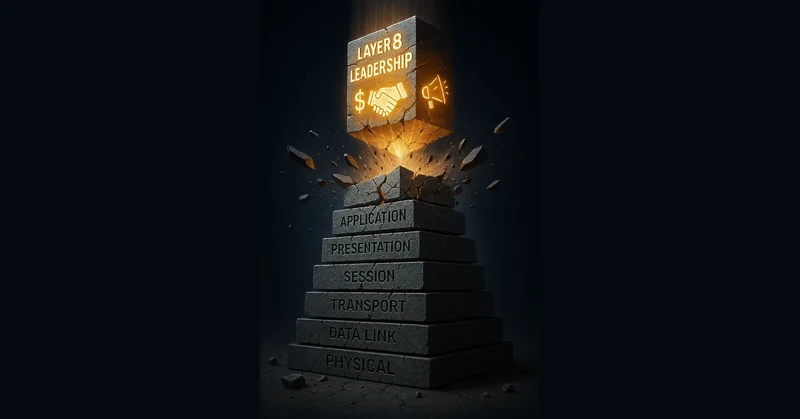
We all learned the OSI model early in our careers. Physical, Data Link, Network, Transport, Session, Presentation, and Application. Seven layers that explain how systems communicate and how users ultimately interact with technology.
My IT department is responsible for mastering those seven layers. We design networks, support users, secure platforms, manage data, and keep information moving.
But leaders in technology eventually discover that an eighth layer exists. Layer Eight is the part of IT that no certification exam ever prepares you for.
Layer Eight deals with budgets, politics, timing, perception, and organizational dynamics. It handles the human side of decision making where logic does not always drive outcomes. And mastering this layer often determines whether a technically correct solution actually succeeds.
Take purchasing decisions. In theory, leadership could choose the lowest price, best rated, or newest innovation. In reality, state procurement contracts, existing agreements, or approval chains may dictate what is actually purchased. There are situations where the ideal technology is not selected simply because it does not align with the awarded contract list. And sometimes leadership must accept that “best” and “permissible” are different categories.
Layer Eight also comes into play when decisions are influenced not by need, but by preference. A request may receive support not because it aligns to strategy, but because it is tied to visibility, influence, or timing. Sometimes projects are prioritized because someone feels overlooked. Other times leaders must navigate individuals who present themselves as disadvantaged or unheard in order to shift focus toward their needs.
This is part of Layer Eight as well.
These scenarios are not technical. They are emotional, positional, strategic, and occasionally dramatic. Leadership must address them professionally, redirect conversations, and still move technology forward.
Mastering Layer Eight requires more than technical understanding. It requires:
-
Making technology decisions that align with compliance and procurement rules
-
Balancing fairness among divisions without creating resentment
-
Understanding when decisions are driven by influence rather than logic
-
Communicating choices clearly so support does not look like favoritism
-
Redirecting unproductive narratives without escalating conflict
Because if you do not handle these dynamics, the technology does not matter.
You can deploy a secure cloud platform, migrate systems efficiently, upgrade networks properly, and still have people frustrated because they felt left out or treated unequally. You can choose a better long term solution and still face pushback from those who wanted something different.
How do you handle the balancing act between technical decisions, budget realities, and organizational politics?