
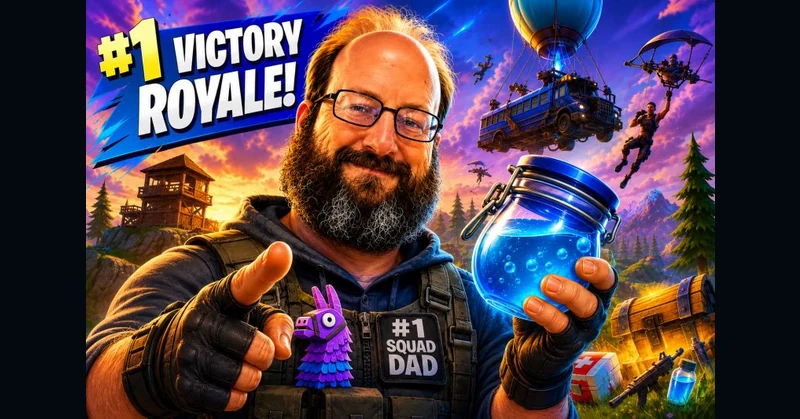
One of the unexpected places I find myself thinking about leadership is while playing Fortnite with my son.
Even though we are playing the same game and trying to achieve the same overall objective, we often approach it very differently. My approach is fairly direct. I want to land quickly, gather weapons, ammunition, and support items, then get into a position where we are ready for whatever comes next. My focus is on being prepared for the immediate challenges ahead.
My son has a completely different strategy. He heads straight for secret areas, hidden passageways, locked rooms, and special loot locations. He is willing to spend more time searching for higher tier equipment that could provide a greater advantage later in the match. Neither approach is necessarily wrong. They are simply different paths toward the same goal.
The challenge comes when we fail to communicate. If I assume he is right behind me while he is exploring a hidden area, we can quickly find ourselves separated, outnumbered, or unprepared. That can easily lead to frustration and finger-pointing about what should have happened differently.
When we communicate our plans, however, everything changes. We understand what each person is trying to accomplish and why. We can support each other's objectives while still working toward the larger mission. The result is usually a stronger team, better preparation, and a much more enjoyable experience
The same lesson applies in higher education and technology leadership.
Different departments often have different priorities, timelines, and definitions of success. One group may be focused on efficiency, another on compliance, another on student experience, and another on long-term planning. From their perspective, each objective makes perfect sense.
Problems arise when we assume everyone sees the world through the same lens we do. Communication helps us understand not only what others are trying to accomplish, but why it matters to them. When we make room for those conversations, we create opportunities for collaboration instead of conflict. People feel heard, objectives become aligned, and organizations are better positioned to succeed. Sometimes the most valuable leadership lessons are found in the places we least expect them.
For me, one of those places just happens to be Fortnite.