
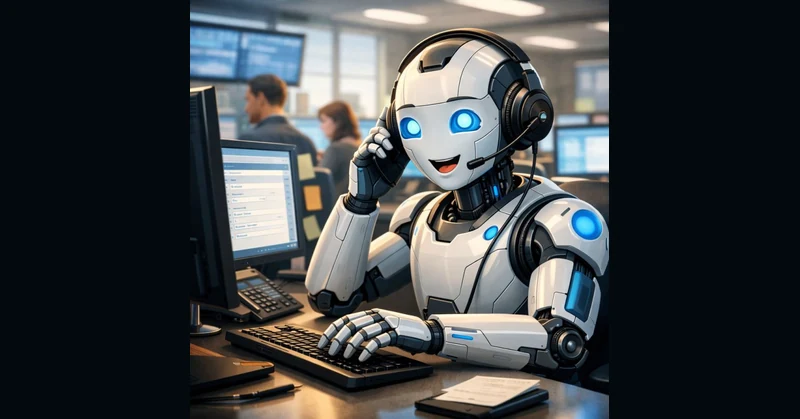
This is a touchy topic for me, because I am deeply rooted in customer service and the value of human connection. I do not want students or employees to ever feel like they are being pushed off to a robot instead of being helped by a real person.
But I am also realistic about how help desks actually operate.
Most of us struggle with staffing. And a properly skilled technician or engineer can often do more good from their desk than walking the floor fixing one device at a time. From a central environment, they can deploy software, resolve account issues, fix systems, and help many people at once instead of one at a time.
The problem is what happens during peak times.And what happens outside of business hours.Phones go unanswered. Lines form at the door. And after 5 PM, on weekends, or during holidays, there may be no one available at all.
So we fall back to voicemail.
We tell ourselves it is fine because voicemail creates a ticket. But let’s be honest about what those tickets usually say: “It doesn’t work.” No required fields. No troubleshooting history. No context.
Now the technician has to start from scratch, the caller is already frustrated, and there is often a trust gap that their issue is really going to be addressed. Even worse, we finally call back and they are no longer available, so now both sides are stuck in limbo.
This is where I am starting to warm up to AI systems like Retell and similar platforms. These tools can answer calls immediately, day or night, walk people through common issues like forgotten usernames, password resets, MFA enrollment, Wi-Fi access, and basic system navigation.
If the problem is not resolved on the first call, the AI can ask the right follow-up questions, document what was already tried, and submit a ticket with real, usable details.
That means when a technician does step in, they are continuing service, not restarting it. Just as important, the caller is not rushed. No one is trying to clear the line. No pressure because ten people are waiting behind them.
They get help at their own pace, even when no one is physically on shift.
To be clear, I do not see this as replacing the warm and fuzzy feeling of talking to a real person. I see it as preventing silence, voicemail, and lost trust when no one can pick up the phone.
So I am genuinely curious how others feel about this.
Do you see AI as a complementary safety net for unanswered and after-hours calls? Or do you think there is a real case for AI being the first level of interaction before reaching a human?
I am not fully sold either way yet. But I am convinced that unanswered calls and empty voicemails are not the service model our students and employees deserve.